Crushed stone chippings (called mıcır in Turkey) are angular crushed stone obtained by crushing rock or coarse gravel in crushers and separating it into defined size ranges on screens. They are one of the most widely used building materials, in concrete, asphalt, road sub-base, under paving and block paving, drainage and landscaping. Unlike the rounded particles of river gravel, chippings have angular faces, which makes the particles interlock better in concrete and asphalt.
In this guide we look at how chippings are produced, the types and the size designations used on site, common size ranges, bulk density (“how many tonnes in 1 m³?”), uses and the factors that determine the price of chippings.
How Are Chippings Produced?
- Blasting and loading: In the quarry, rock is broken by drilling and blasting and hauled to the crushing plant (drill and blast guide).
- Primary crushing: A jaw or impact crusher reduces large blocks (jaw crusher).
- Secondary and tertiary crushing: Cone, impact or vertical shaft (VSI) crushers bring the material to the required size and particle shape (cone crusher, VSI).
- Screening: Vibrating screens separate the crushed material into fractions (vibrating screen guide).
- Stockpiling: Each fraction is stockpiled separately, avoiding segregation and contamination (stockyard management).
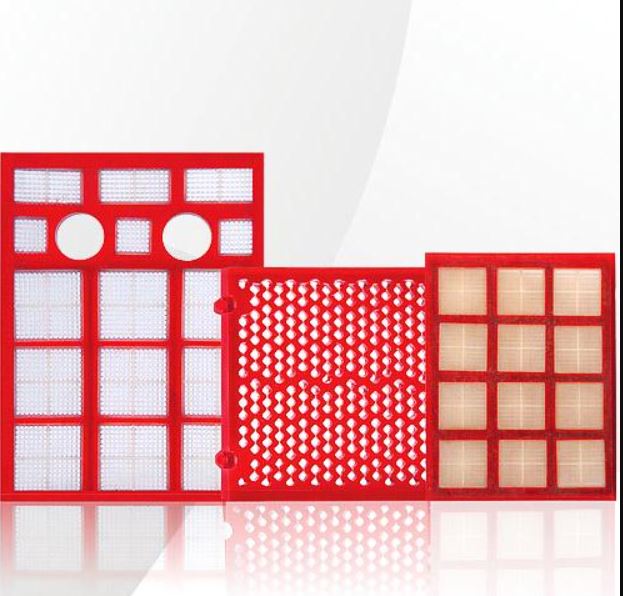
Product size is set by the apertures of the screen wire, so correct screen wire selection is the basis of chippings quality (screen wire sizes guide).
Types and Size Designations
On Turkish sites chippings are usually named by “number”. This is not a standard definition and can differ slightly between quarries and regions. Common usage is as follows:
| Site Name (Turkey) | Common Size Range | Typical Use |
|---|---|---|
| Crushed sand (dust, “No. 0”) | 0–5 mm | Concrete, plaster, mortar, under block paving, asphalt |
| No. 1 chippings | 5–12 mm | Concrete, asphalt, under paving, ready-mix concrete |
| No. 2 chippings | 12–19 mm (12–22 mm in some quarries) | Concrete, asphalt, drainage |
| No. 3 chippings | 19–25 mm (22–38 mm in some quarries) | Concrete, drainage, sub-base |
| Sub-base (all-in mix) | 0–31.5 mm or 0–63 mm | Road sub-base, fill, site levelling |
| Ballast | Coarse stone of roughly 30–60 mm | Railways, coarse drainage |
| Rock fill | Large crushed stone | Fill, under foundations, retaining |
Important: Order by the size range in mm, and where needed by the category in the relevant aggregate standard, not by the site number. Technical specifications usually define fractions as “d/D” (e.g. 4/11.2 mm or 11.2/22.4 mm) (aggregate standards guide).
Chippings by Rock Type
- Limestone chippings: The most common type; for concrete and general construction.
- Basalt chippings: Hard and wear-resistant; preferred for asphalt surface courses and high-strength concrete.
- Dolomite, andesite and diabase chippings: Used in concrete and asphalt depending on regional sources.
- Crushed gravel chippings: Produced by crushing coarse river gravel.
Bulk Density: How Many Tonnes in 1 m³?
The weight of chippings is expressed with two different densities:
| Concept | Explanation | Approximate Value |
|---|---|---|
| Particle density (specific gravity) | Density of the stone itself, without voids | Limestone ~2.6–2.7 t/m³; basalt ~2.8–3.0 t/m³ |
| Loose bulk density | Weight of chippings in a heap, including voids between particles | Usually ~1.4–1.6 t/m³ |
| Compacted bulk density | In compacted condition | Higher than the loose value |
In practice, 1 m³ of loose chippings weighs about 1.4–1.6 tonnes. The exact value depends on rock type, fraction, particle shape and moisture. For stock and dispatch calculations, the value measured by the quarry itself should be used. This difference matters when converting truck body volume to tonnage.
Chippings Quality
The main properties expected of good chippings:
- Cubical particle shape: Flaky and elongated particles reduce concrete workability and asphalt strength (aggregate quality guide).
- Low fines: Clay and dust impair concrete strength and binder adhesion; washing may be needed.
- Strength and wear resistance: Measured by tests such as the Los Angeles abrasion value.
- Correct grading: The fraction must stay within its stated size range; checked by sieve analysis.
Particle shape depends on crusher type, setting and feeding. Choke-fed cone crushers and a VSI at the tertiary stage improve particle shape significantly.
Uses of Chippings
| Application | Typical Product | Key Quality Criterion |
|---|---|---|
| Ready-mix concrete | 0–5, 5–12, 12–19 (22) mm | Grading, fines, particle shape |
| Asphalt | Various fractions; hard rock in surface courses | Wear resistance, flakiness, bitumen affinity |
| Road sub-base | Sub-base 0–31.5 / 0–63 mm | Grading, compaction |
| Under paving and block paving | Crushed sand, fine chippings | Cleanliness, grading |
| Drainage | Single-size coarse chippings | Cleanliness, permeability |
| Railways | Ballast | Strength, shape, wear resistance |
Factors Affecting Chippings Prices
- Rock type (limestone, basalt, etc.) and quality class,
- Fraction (fine fractions and special products may need more processing),
- Washed or unwashed,
- Ex-quarry or delivered, and haul distance,
- Order quantity and season,
- Energy, fuel and wear part costs.
For the producer, the cost of chippings is driven by blasting, loading and haulage, crushing energy and wear parts. For managing these items see our crushing plant cost guide.
Frequently Asked Questions
What is the difference between chippings and gravel?
Chippings are produced by crushing rock and are angular; gravel consists of particles naturally rounded in river beds.
What size is “No. 2” chippings?
In common Turkish usage it is 12–19 mm; some quarries produce it as 12–22 mm. Confirm the mm range when ordering.
How many kilograms is 1 m³ of chippings?
Around 1,400–1,600 kg in loose condition, depending on rock type, fraction and moisture.
Which chippings are used in concrete?
Usually crushed sand together with 5–12 and 12–19 (22) mm fractions, in proportions set by the concrete class and mix design.
Which crusher is needed to produce chippings?
A jaw or impact crusher for primary crushing, and cone, impact or VSI crushers for secondary and tertiary crushing depending on the rock (what is a crusher guide).
Calculating Quantity: How Many Tonnes Do You Need?
The quantity of chippings required for an application can be roughly calculated as:
Quantity (t) ≈ Area (m²) × Thickness (m) × Bulk density (t/m³) × Compaction allowance
For example, to spread chippings with a loose bulk density of 1.5 t/m³ over 100 m² at 10 cm thick: 100 × 0.10 × 1.5 = 15 tonnes. If the layer will be compacted, a little extra material is usually allowed because compaction reduces volume. For concrete mixes, the aggregate quantity is calculated from the mix design.
Crusher and Screen Settings in Chippings Production
| Goal | What to Do in the Plant |
|---|---|
| More No. 1 (fine chippings) | Reduce the secondary/tertiary crusher setting, use a VSI |
| More cubical product | Run the cone crusher choke-fed, add a tertiary VSI |
| Less dust | Pre-screening, washing, avoid excessively small settings |
| Change fraction limits | Change the screen wire apertures |
Changes in product distribution should be tracked with regular sieve analysis (sieve analysis guide).
Field Example
Suppose that at a limestone quarry most demand is for No. 1 chippings and crushed sand, while No. 3 chippings accumulate in stock. Part of the coarse fraction is returned to the crusher in closed circuit and a VSI is added at the tertiary stage. Unsaleable coarse product falls, the fine products in demand increase and the stockyard is relieved.
Glossary
- Fraction: Product within a given size range.
- Sub-base: Road material containing both fine and coarse particles.
- Ballast: Coarse crushed stone used in railway track beds.
- Crushed sand: Fine aggregate produced by crushing rock (manufactured sand production).
- Loose bulk density: Weight per m³ of material in a heap.
More Questions
What is the difference between chippings and sub-base?
Chippings are screened to a given size range; sub-base is a road material made of a mix of fine and coarse particles and used compacted.
Why are basalt chippings more expensive?
Basalt is harder and more abrasive, so crushing cost and wear part consumption are higher; sources may also be limited.
Should chippings be washed?
For concrete and some special uses where fines and clay are limited, washing may be needed; the decision follows the specification.
CSP Mühendislik Support
CSP Mühendislik designs and manufactures crushing and screening plants of crushers, screens, feeders and conveyors for chippings and manufactured sand production, and supplies screen wire, wear parts and other spare parts. For manufactured sand see our manufactured sand guide, and for equipment our products page.