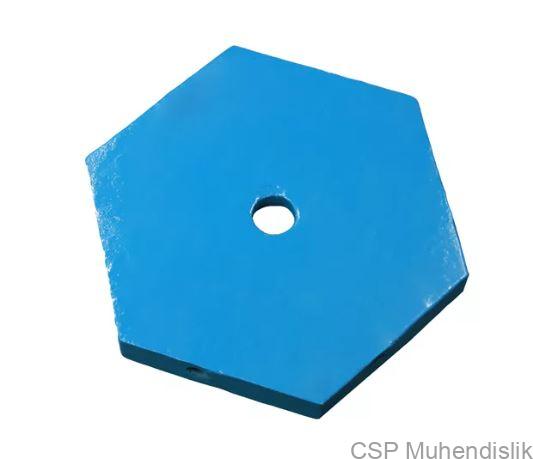
The inner surfaces of a crusher housing are subject to heavy wear from the constant impact and abrasion of rock thrown around during crushing. The parts that protect the housing from this wear are called housing liners, and those protecting the side walls of the crushing chamber are called side liners. In impact crushers in particular, rock is thrown from the rotor at high speed, so housing and side liners are even more important. When they are neglected, the housing plates thin and wear through, and the crusher needs an expensive housing repair.
In this guide we cover in detail the function of housing and side liners, material options, wear tracking, replacement steps, points to watch during fitting and spare part selection. For general impact crusher operation, see our impact crusher guide.
Function of Housing and Side Liners
- Protect the housing: Prevent rock from hitting and rubbing the housing plates directly.
- Maintain the crushing chamber geometry: They define the flow path of the material.
- Provide an easily replaceable wear surface: Wear is concentrated on cheap, replaceable parts instead of the expensive housing.
- Indirectly protect the rotor end discs: Maintaining the gap between the side liners and the rotor ends limits side wear.
Liner Zones
| Zone | Wear character | Note |
|---|---|---|
| Feed inlet | Impact + abrasion | Where large falling rocks hit first |
| Rotor sides (side liners) | Heavy abrasion | The narrow zone between the rotor and housing |
| Behind the aprons and roof | Impact | Areas hit by thrown rock |
| Discharge zone | Abrasion | Where crushed material flows out |
Material Options
| Material | Advantage | Suitable zone |
|---|---|---|
| Wear plate (400–500 HB) | High wear resistance, easy to shape | Abrasion-dominated zones |
| Manganese steel | High impact resistance | Impact zones |
| Chrome cast iron | Very high wear resistance | Side liners, controlled feed |
| Rubber/composite | Impact damping, low noise | Some discharge and chute zones |
When choosing material, the balance between impact and abrasion should be considered according to the crusher type and the rock processed. Using different materials in different zones of the same crusher can be economical.
Wear and Failure Signs
- Marked thinning, gouging or holes in the liners,
- Worn or broken bolt heads,
- Liners moving or falling off,
- Shiny wear marks on the housing plates,
- Plate thinning or heat marks visible from outside the crusher,
- Material leaking from the housing.
Inspection and Measurement
| Check | Interval | Method |
|---|---|---|
| Visual liner check | Weekly / at bar changes | Visual, with the housing open |
| Thickness measurement | Monthly | Ultrasonic thickness gauge or template |
| Bolt tightness | Weekly | Torque wrench |
| Housing outer surface | Monthly | Check for plate thinning and cracks |
Replacement Step by Step
- The crusher and feeder are stopped, LOTO is applied and the rotor is confirmed to have stopped.
- The housing is opened and the safety locks are fitted; the rotor is locked.
- The bolts of the worn liners are removed. Worn or crushed bolt heads can be cut off.
- The liners are removed with a lifting device; the housing surface is cleaned.
- The housing plate is checked for thickness and cracks and repaired if necessary.
- The new liners are fitted; bolts of the correct grade are tightened to the correct torque.
- The gap between the side liners and the rotor end discs is checked.
- The housing is closed; the bolts are retightened after the first operating hours.
Fitting Tips
- Do not leave gaps between liners; gaps allow rock to reach the housing.
- Bolt heads should be countersunk into the liner surface where possible, or otherwise protected.
- Using a locking compound or lock nuts prevents loosening through vibration (see locking compound).
- Back surfaces must be clean so the liners seat fully on the housing.
Common Mistakes
- Running liners until they wear through,
- Neglecting bolt checks,
- Choosing an unsuitable material (brittle material in an impact zone),
- Leaving gaps between liners,
- Fitting new liners without checking the housing plate.
Troubleshooting Table
| Symptom | Possible cause | Solution |
|---|---|---|
| Liner wears quickly | Abrasive material, high rotor speed, unsuitable material | Review material selection and speed |
| Liner cracks | Brittle material in an impact zone | Use a tougher material |
| Bolts breaking | Wrong torque, loose liner, unprotected bolt head | Correct torque, countersunk bolts |
| Wear marks on the housing | Gap between liners or a worn-through liner | Replace immediately, close the gaps |
An Example from the Field
At a recycling plant, the side liners of an impact crusher were not on the inspection list. During a bar change it was noticed that one side liner had fallen off completely and the rotor end disc was wearing the housing side plate. The housing plate was repaired, a weekly check and a monthly thickness measurement for the side liners were added to the maintenance list, and the bolts were replaced with lock nuts. No similar damage occurred in the following period.
Cost and Life Analysis
The cost of housing liners is very small compared with the cost of a housing plate repair and crusher downtime. Recording liner life by tonnage makes it possible to fit replacements into planned shutdowns and set the right stock level. By trying different materials in different zones, the lowest cost per tonne can be found.
OEM or Aftermarket?
| Criterion | Check |
|---|---|
| Dimensions and hole positions | Full seating on the housing, gap-free fitting |
| Material | Hardness and analysis certificate |
| Thickness | Original thickness or more |
| Bolt compatibility | Countersink and hole size |
Pre-Purchase Checklist
- Have the crusher model and liner part numbers been identified?
- Which zones’ liners will be replaced?
- Has the material been chosen by zone?
- Are bolts, nuts and locking elements included in the order?
Safety
- With the housing open, the safety locks must be fitted and the rotor locked.
- Liners are heavy; use suitable lifting equipment.
- Take fire precautions during cutting and welding.
Frequently Asked Questions
How often are housing liners replaced?
It varies by zone and material; side liners and the feed inlet are usually replaced more often.
Wear plate or cast liner?
Wear plates are economical in abrasion-dominated zones; in impact-dominated zones, cast manganese or chrome liners are more suitable.
What should be done if the housing plate is worn?
Reinforcement or plate replacement is carried out with a suitable welding procedure; major damage requires a workshop repair.
How much gap should there be between the side liner and the rotor?
It depends on the crusher model; the gap specified by the manufacturer should be maintained.
Liner Applications by Crusher Type
| Crusher | Liner zones | Note |
|---|---|---|
| Impact crusher (HSI) | Feed inlet, side walls, behind the aprons, roof, discharge | Heavy impact and abrasion from thrown rock |
| Tertiary impact crusher | Side liners, around the grinding path | Abrasion dominates because of fine material |
| Hammer crusher | Breaker plates, side liners | The area around the grate and the breaker plates is critical |
| Jaw crusher | Cheek plates | See the cheek plates guide |
For side protection parts in jaw crushers, see our cheek plates guide.
Creating a Wear Map
Since housing liners wear at different rates in different zones, creating a “wear map” makes maintenance planning easier:
- The inside of the housing is divided into zones and each liner is numbered.
- Liner thicknesses are measured and recorded at every inspection.
- The wear rate of each zone is calculated by tonnage.
- For fast-wearing zones, a more durable material or a thicker liner is considered.
- Replacements are grouped by liners that will reach their limit at the same time and fitted into planned shutdowns.
Effect of Operating Conditions
| Condition | Effect | Recommendation |
|---|---|---|
| High rotor speed | The energy of thrown rock and wear increase | Minimum speed suited to the product |
| Abrasive material | Abrasive wear accelerates | Chrome or hard wear plate |
| Wet, sticky material | Build-up and corrosion in the housing | Regular cleaning |
| Recycled material | Impact from steel and foreign objects | Tough material, bolt protection |
Maintenance Record Form
| Field | Record |
|---|---|
| Liner number and zone | Position on the wear map |
| Measured thickness | With date and tonnage |
| Bolt condition | Tight / loose / broken |
| Replacement | Date, material |
| Housing plate | Wear or crack observation |
Stock Planning
- Keep at least one set in stock for the liners of the fastest-wearing zones.
- Keep enough special bolts and nuts (countersunk, high-strength).
- Consumables should be ready for jobs that require cutting and welding.
More Questions
Can the housing be hardfaced by welding instead of using liners?
It can be applied as a temporary solution in some zones; however, replaceable liners are much more controllable in terms of maintenance and cost.
Is increasing liner thickness always beneficial?
A thicker liner extends life; however, it must not change the crushing chamber geometry or the clearances to the rotor.
Why does the gap at the side liners matter?
If the gap between the rotor end discs and the side liners grows, material enters it and wears both the rotor sides and the housing.
Spare Parts and Service for Housing and Side Liners
CSP Mühendislik supplies housing liners, side liners and fasteners for impact crushers and other crushers as part of its impact crusher spare parts and crusher spare parts ranges, and provides service support for liner replacement and housing repair. Send your crusher model on WhatsApp and we will prepare a quote quickly.