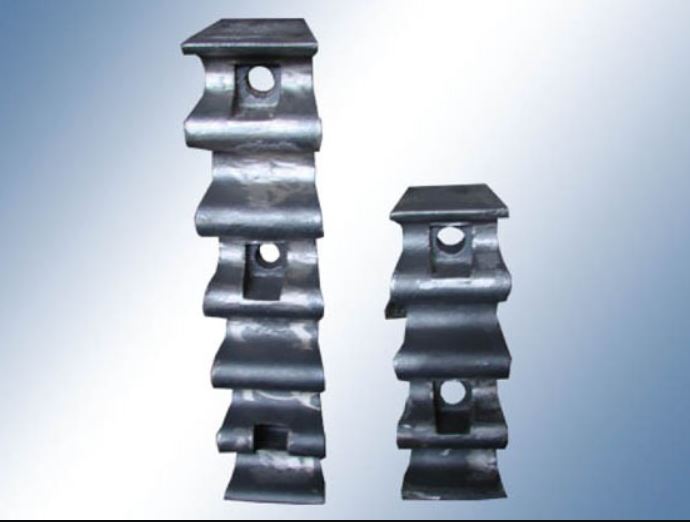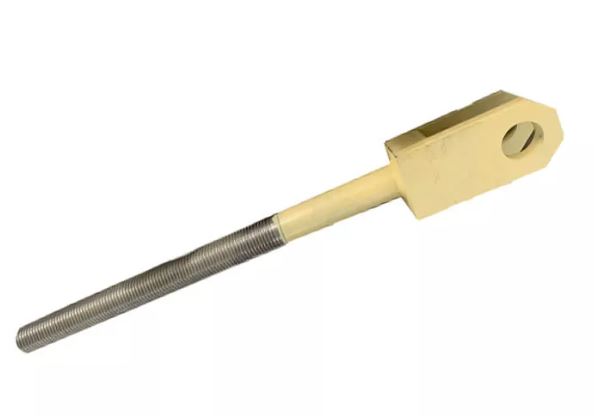
In a jaw crusher, the tension rods and springs are among the least noticeable but most critical assemblies for safe operation. This assembly continuously pulls the moving jaw body (pitman) towards the toggle plate and keeps the toggle plate firmly seated in its seats. When the tensioning does not work properly, the toggle plate can slip out of its seat, knocking starts between the pitman and the frame, and expensive parts are damaged very quickly.
In this guide we cover in detail the function of the tension assembly, the differences between mechanical spring and hydraulic tension systems, failure signs, adjustment and replacement steps, common mistakes and correct spare part selection. For the general working principle of the jaw crusher, see our jaw crusher guide.
Function of the Tension Rods and Springs
In a single-toggle jaw crusher, the pitman is supported at its upper end on the eccentric shaft; its lower end bears against the frame (or the setting mechanism) through the toggle plate. The toggle plate sits in the seats (toggle seats) at its two ends by pressure alone; it is not bolted or pinned. As the pitman moves forwards and back during the crushing stroke, the toggle plate must not leave its seat on the return stroke. This is where the tension assembly comes in:
- Keeps the toggle plate in its seats: The tension rod is attached to the lower part of the pitman and, thanks to the spring preload, constantly pulls the pitman towards the toggle plate.
- Prevents knocking: It closes the gap that could form on the pitman’s return, stopping parts from hitting each other.
- Helps with overload protection: When an uncrushable object enters the chamber, the toggle plate acts as a fuse and breaks; the tension assembly limits the uncontrolled swing of the pitman at that moment.
- Rebalances the system after adjustment: When the CSS (closed side setting) is changed, the position of the toggle plate changes; the tension is readjusted for the new position.
For detailed information on the toggle plate and its seats, see our toggle plate guide, and for the pitman, our pitman maintenance guide.
Types of Tension System
Mechanical (spring) tensioning
In the classic design, one or two tension rods pass through a bracket at the rear of the frame. At the end of the rod there is a coil spring or rubber/polyurethane buffer pack and an adjusting nut. As the nut is tightened, the spring is compressed and the preload increases. It is a simple, cheap solution that is easy to repair on site; however, the preload must be readjusted by hand every time the CSS is changed.
Hydraulic tensioning
In modern crushers, the tension force is provided by hydraulic cylinders and accumulators. The system automatically maintains tension when the CSS changes, shortens adjustment time and reduces human error. On the other hand, the hydraulic unit, seals and accumulator precharge pressure need regular checks.
| Feature | Mechanical spring tensioning | Hydraulic tensioning |
|---|---|---|
| Investment cost | Low | Higher |
| Adjustment | By hand, at every CSS change | Automatic or push-button |
| Maintenance items | Spring, nut, rod, buffer | Cylinder seals, hoses, accumulator, oil |
| On-site repair | Easy | Requires expertise |
| Risk of error | Incorrect preload setting | Pressure loss, leakage |
Components and Materials
- Tension rod: Made of high-strength alloy steel, with a threaded section at the end and a pitman connection eye. It is important that the threads are not crushed and the rod is not bent.
- Tension spring: A coil spring of spring steel or rubber/polyurethane buffer packs. Fatigue and breakage are the most common damage.
- Spring seats and washers: Ensure the spring compresses evenly; if they wear, the spring shifts off its axis.
- Adjusting nut and lock nut: Set and lock the preload. If the lock nut is forgotten, vibration loosens the assembly.
- Connecting pins and bushings: Act as wear parts at the rod’s connection on the pitman side.
- In hydraulic systems: Tension cylinder, accumulator, pressure switch, hoses and valve block.
Failure and Wear Signs
Problems in the tension system usually show themselves first through noise. If any of the following signs are seen, the crusher should be stopped and checked:
- A rhythmic knocking or metallic banging from the lower part of the crusher,
- Slip marks in the toggle seat and crushing of the seat edges,
- A marked shortening of spring length or cracks in the spring coils,
- A bent tension rod, crushed threads, a loose nut,
- In hydraulic systems, a pressure drop, oil leakage at the cylinder, or the accumulator cutting in frequently,
- Frequent breakage of the toggle plate (loose tension causes the plate to take impacts).
Inspection and Measurement
| Check | Interval | Method |
|---|---|---|
| Visual check: spring, rod, nuts | Every shift | Visual check with the crusher stopped; broken spring, loose nut |
| Spring compressed length | Weekly and after every CSS change | Compare with the manufacturer’s length using a tape measure |
| Toggle seats and plate contact | Weekly | Visual check after cleaning and gap check with a feeler gauge |
| Hydraulic pressure | Daily | Pressure gauge; compare with the manufacturer’s value |
| Accumulator precharge pressure | Every 3–6 months | Measurement with a nitrogen charging kit (authorised personnel) |
| Rod straightness and threads | Monthly or at overhaul | Visual and straight-edge check after removal |
How Is the Tension Preload Set?
Depending on the crusher model, the preload is usually given in the manufacturer’s operating manual as a “spring compressed length” or “tension nut position”. The general steps are:
- Stop the crusher, lock out the feeder and conveyors and tag the energy sources (LOTO).
- Clean the toggle area and seats; wet fine material acts like sandpaper in the seats.
- Check that the toggle plate is fully seated in both seats.
- Tighten the tension nut gradually to bring the spring to the length specified by the manufacturer. On two-rod systems, tighten both sides equally.
- Lock the setting by tightening the lock nut.
- Run the crusher empty; observe that there is no knocking and that the toggle plate stays stable in its seat.
- Recheck spring length after the first loaded run.
Important: If the preload is too low, the toggle plate slips out of its seat; if it is too high, the pitman bearings and toggle seats carry unnecessary load and the spring fatigues early. The “the tighter the better” approach is wrong.
Replacing the Tension Spring and Rod Step by Step
- Preparation: The new spring, washers/seats, nut and, if necessary, rod are prepared. Dimensions and the material certificate are checked.
- Safe shutdown: LOTO is applied. The crushing chamber is emptied.
- Supporting the pitman: When the tension is released, the lower end of the pitman can become free; it is supported with blocking or a lifting device as the manufacturer recommends.
- Releasing the tension in a controlled way: The nut is loosened slowly; the energy of the compressed spring must not be released uncontrolled. In hydraulic systems, the pressure is relieved.
- Removal: The spring pack, seats and nut are removed; the rod is disconnected from the pitman.
- Inspection: The connection eye, pin and bushing, frame bracket and seats are checked.
- Assembly: The new parts are fitted, a suitable lubricant is applied to the threads and the preload is set to the manual value.
- Test: Empty and loaded running, and a recheck at the end of the first shift.
Common Mistakes
- Not adjusting the tension after a CSS change: When setting shims are added or removed, the position of the toggle plate changes; if the tension is not updated accordingly, the plate is left loose.
- Tightening one side only: On two-rod systems, uneven tension forces the pitman sideways and loads the bearings at an angle.
- Continuing to run with a broken spring: Even a single broken spring reduces preload and leads to knocking.
- Not checking the dimensions and stiffness of an aftermarket spring: A spring with a different spring rate produces a different force at the same length.
- Adjusting without cleaning the toggle area: Built-up material causes incorrect seating and incorrect measurement.
- Neglecting accumulator pressure in hydraulic systems: An accumulator with low precharge pressure cannot do its shock-damping job.
Troubleshooting Table
| Symptom | Possible cause | Solution |
|---|---|---|
| Knocking from the lower area | Low tension preload, broken spring | Measure spring length, replace the broken spring, set the preload |
| Toggle plate breaks frequently | Loose tension, worn seats, tramp metal | Check the tension and seats; put the metal separator into service |
| Spring breaks quickly | Excessive preload, poor-quality spring, wrong spring rate | Return to the manufacturer’s value; use a certified spring |
| Rod bends | Uneven tension, impact from uncrushable material | Replace the rod, set both sides equally |
| Hydraulic pressure drops | Seal leakage, accumulator failure | Renew the seal kit, check the precharge pressure |
| Nut keeps loosening | No lock nut or crushed threads | Lock nut and, if necessary, a new rod |
Selecting Tension Rod and Spring Spare Parts
Tension parts may look small, but a wrongly chosen spring or rod puts the toggle plate, seats and pitman at risk. When sourcing spare parts, pay attention to the following:
- Dimensional fit: Rod length, thread size, connection eye diameter and spring inside/outside diameter must match the crusher model exactly.
- Spring rate and free length: The force a spring produces depends on its compressed length; a different spring rate at the same length means a different preload.
- Material and heat treatment: Alloy steel for rods, suitable spring steel and surface protection for springs.
- Replacing as a set: On two-rod crushers, replacing the springs on both sides together ensures balanced preload.
- In hydraulic systems: Seal kits and the accumulator must suit the working pressure.
At CSP Mühendislik we supply tension rods, springs, spring seats and hydraulic tensioning parts for jaw crushers as part of our jaw crusher spare parts range. We recommend assessing the CSS setting system and toggle plate parts, which should be checked in the same shutdown, at the same time.
Safety
- A compressed spring stores a considerable amount of energy; do not loosen the nuts uncontrolled and do not stand in line with the spring axis.
- In hydraulic systems, pressure must be fully relieved before work and the accumulators confirmed to be drained.
- The pitman must be supported before the tension is released.
- All work must be carried out under a lockout/tagout (LOTO) procedure.
An Example from the Field: A Toggle Plate That Kept Breaking
At a basalt quarry, the toggle plate of a primary jaw crusher was breaking every few weeks. The plant first considered trying a thicker plate. The investigation showed that a few months earlier setting shims had been added when the CSS was reduced, but the tension springs had not been readjusted. The springs had been left too long and the preload had fallen; the toggle plate was slipping slightly in its seat on every stroke and taking impacts. In addition, one of the two springs was broken. The broken spring was replaced, both springs were set to the length in the manual, and a tension check after CSS changes was added to the shift procedure. The toggle plate breakages stopped, and the wear rate of the seats also fell markedly. This example shows how expensive the consequences of a small adjustment error in the tension system can be.
Pre-Purchase Checklist
- Have the crusher make, model and serial number been identified?
- Is a mechanical or hydraulic tension system used?
- Have the rod length, thread size and connection eye diameter been measured?
- Are the spring’s free length, wire diameter and inside/outside diameter known?
- On a two-rod system, is a set being ordered for both sides?
- Are washers, seats, nuts and lock nuts included in the order?
- For a hydraulic system, has the need for a seal kit and accumulator been assessed?
Frequently Asked Questions
How often should the tension spring be replaced?
It is replaced according to condition rather than at a fixed number of hours: when permanent shortening, cracks or breakage are seen. In heavy-duty conditions, renewing the springs at every major overhaul is good practice.
What happens if the tension is too tight?
The pitman bearings, toggle seats and tension rod carry unnecessary load; the spring fatigues early and the crusher’s ability to absorb shocks is reduced.
Is it possible to switch to hydraulic tensioning?
Some crusher models have hydraulic tensioning conversion kits. Feasibility depends on the frame design and the manufacturer’s approval.
Can rubber buffers be used instead of a tension spring?
In some designs rubber or polyurethane buffers are standard. However, using buffers instead of a spring changes the preload characteristic; it should not be done without the manufacturer’s approval.
Should the tension parts also be replaced when the toggle plate breaks?
The tension rod and spring may have taken a sudden load during the breakage. The straightness of the rod, the threads and the spring length must always be checked; if there is damage, they should be replaced together.
Spare Parts and Service for Jaw Crusher Tension Parts
CSP Mühendislik manufactures jaw crushers and supplies jaw crusher spare parts such as tension rods, tension springs, hydraulic tensioning elements and toggle plates from stock or at short notice. You can get support from our service, maintenance and repair team for on-site tension adjustment, toggle area overhaul and crusher maintenance. Use our WhatsApp line below to share your crusher model and serial number so we can quickly supply the right part.