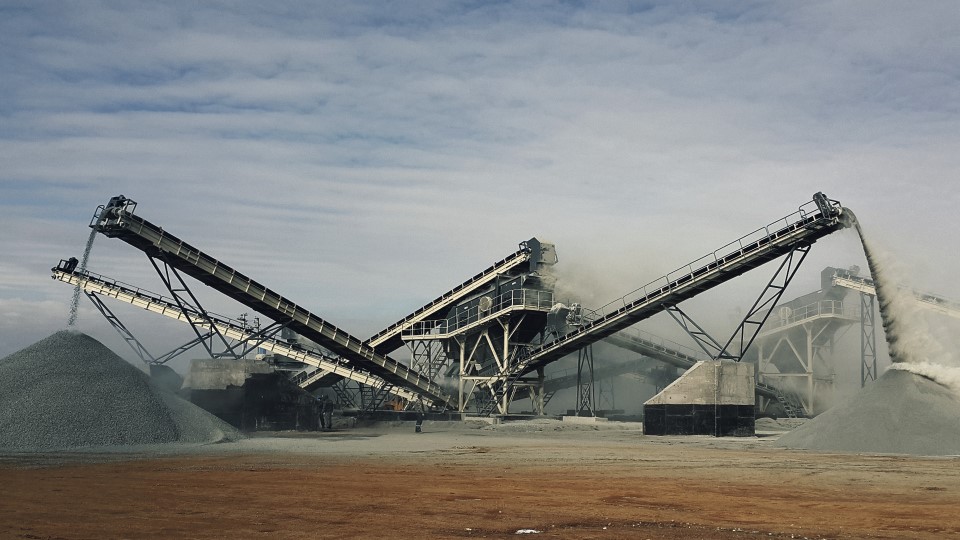
Mining and quarrying produce raw materials that are indispensable to construction, energy, industry and agriculture. At the same time, they can have significant environmental impacts in areas such as water, energy, land use, dust, noise and waste. Today, operators have to treat sustainability as an integral part of production because of legal obligations, the expectations of investors and lenders, the supply chain requirements of major customers and the acceptance of local communities.
In this guide we cover the main areas of sustainability and practical steps for aggregate quarries, crushing and screening plants and mining operations: water, energy and carbon, dust and noise, waste management, site restoration, biodiversity, community relations and reporting.
Why Sustainability?
- Cost: Water and energy efficiency directly reduce operating costs.
- Permits and continuity: Environmental compliance is essential to keeping licences and permits.
- Market: Major construction projects and building material manufacturers have started to ask their suppliers for environmental performance data.
- Finance: Environmental, social and governance (ESG) criteria play an increasing role in lending and investment decisions.
- Social acceptance: Good relations with the local community secure the operation’s long-term future.
1. Water Management
Washing plants and mineral processing plants use a lot of water. The main steps in water management are:
- Measurement: Water consumption and losses should be metered, and water consumption per tonne tracked.
- Recovery: Thickener and filter press systems return most of the water used to the circuit (thickener and filter press guide).
- Sand recovery: Preventing fine sand from escaping to the ponds both recovers product and reduces the load on the ponds (hydrocyclone guide).
- Rainwater: Site drainage and rainwater harvesting can reduce fresh water demand.
- Discharge control: Settling and monitoring should ensure muddy water does not reach rivers.
2. Energy Efficiency and Carbon Footprint
In crushing and screening plants, most energy is consumed by crushers, screens, conveyors and pumps. In the pit, diesel consumption (mobile plant and trucks) is a significant item.
| Area | Practice |
|---|---|
| Measurement | kWh/tonne and litres/tonne indicators; belt scales and energy analysers (belt scale) |
| Crushing circuit | Choke feeding, correct setting, pre-screening, timely replacement of wear parts (energy efficiency guide) |
| Motors and drives | High-efficiency motors, variable frequency drives, reduced idle running (electric motors) |
| Blasting | Reducing crushing and grinding energy through better fragmentation (drill and blast) |
| Haulage | Road maintenance, fleet optimisation, conveying, electric equipment (loading and haulage) |
| Renewable energy | Solar power on plant roofs or land |
Environmental product declarations (EPD): EPDs, which present the environmental impacts of building materials over their life cycle in a standard format, are becoming increasingly common in the aggregates and building materials sector. An aggregate producer that records its energy and fuel data regularly will find it easier to prepare an EPD later.
3. Dust and Noise
Dust and noise are the most frequent sources of complaints in relations between quarries and plants and the surrounding community. Dust is also important for workers’ health.
- Dust: Water sprays and misting systems, enclosed transfer points, dust collection filters, road watering, windbreaks around stockpiles and green barriers.
- Noise: Rubber and polyurethane liners and screen panels, crusher and screen enclosures, noise barriers, scheduling of working hours, and a suitable choice of reversing alarms on mobile plant.
- Blast vibration and air overpressure: Controlled through delay design and monitoring.
For detailed technical solutions see our dust and noise control guide.
4. Waste and Overburden Management
- Overburden and waste rock: Overburden and waste rock should be stored stably in planned tips, and used for restoration or as fill where possible.
- Wash plant sludge: Dewatering it as filter press cake reduces storage volume and risk; under suitable conditions it can be put to use.
- Surplus fines: Using them as manufactured sand and filler reduces unsaleable stock and dust problems (manufactured sand production).
- Mine tailings: Tailings dam safety is critical for mineral processing tailings; dry stacking of filtered tailings is a risk-reducing approach.
- Industrial waste: Waste oils, filters, tyres, worn metal parts and conveyor belts should be collected separately and sent to licensed facilities. Worn manganese and steel parts can be recycled as scrap.
- Recycled aggregate: Using construction and demolition waste as aggregate reduces the use of natural resources (construction and demolition waste recycling).
5. Site Restoration
Restoration should be planned at the start of an operation, not at the end.
- Conserving topsoil: Topsoil is stripped separately during overburden removal and stored under suitable conditions.
- Progressive restoration: Benches that have been worked out are restored while operations continue.
- Slope grading: Final faces are graded for long-term stability and drainage is provided.
- Revegetation: Planting of trees and grassland with local species.
- After-use: Options such as wildlife habitat, agriculture, recreation, a lake or a solar farm are assessed together with local needs.
For the place of restoration in quarry planning see our quarry planning guide.
6. Biodiversity
When managed well, quarry sites can also create opportunities for biodiversity. Abandoned benches and ponds can provide habitat for some bird and plant species. A biodiversity assessment, taking account of sensitive species and periods (such as the breeding season), and using local species in restoration are recommended.
7. Community Relations
- Regular, transparent communication with the local community; setting up a complaints mechanism.
- Preferring local employment and suppliers.
- Advance notice of issues such as blasting times and traffic.
- Social responsibility projects in areas such as roads, schools and health.
8. Occupational Health and Safety
The health and safety of workers is at the heart of the social dimension of sustainability. Accident rates, occupational diseases and training hours are among the core indicators in ESG reporting (occupational safety guide).
9. Measurement and Reporting
| Indicator | Example Unit |
|---|---|
| Energy consumption | kWh/tonne |
| Fuel consumption | litres/tonne |
| Water consumption and recovery rate | m³/tonne, % |
| Carbon emissions | kg CO₂e/tonne |
| Area restored | hectares |
| Waste recovery rate | % |
| Lost-time injury frequency rate | Per million hours worked |
| Number of complaints and resolution time | Count, days |
When measured regularly, these indicators reveal improvement opportunities and allow reliable information to be provided to customers, lenders and the community. Remote monitoring and digital systems make collecting this data easier (automation and digital twin).
Field Example
Suppose an aggregate operation needs to provide environmental performance data to become a supplier to a large infrastructure project. It first starts measuring kWh/tonne and litres/tonne with belt scales and energy meters. The measurements show that the secondary crusher runs half-empty and the conveyors run idle for long periods. When feed control and automatic stop logic are added, energy consumption falls. A sand recovery unit and thickener added to the washing plant reduce water consumption. In the end the operation both cuts its costs and enters a new market.
Frequently Asked Questions
Where should a small quarry start with sustainability?
With measurement: energy, fuel and water consumption and per-tonne indicators. Then visible, effective steps such as dust control and progressive restoration can be taken.
Are sustainability investments expensive?
Some require investment, but a large proportion of energy and water efficiency measures pay for themselves quickly.
What is an EPD?
An environmental product declaration is a document that presents the environmental impacts of a product over its life cycle in a standard, verified format.
When should restoration be carried out?
As far as possible, in parallel with extraction and progressively.
How Maintenance and Spare Parts Management Support Sustainability
Sustainability is supported not only by large investments but also by day-to-day maintenance practice. A well-maintained plant uses less energy, produces less waste and runs more safely.
| Practice | Sustainability Effect | Related Guide |
|---|---|---|
| Timely replacement of wear parts | Crusher efficiency is maintained, kWh/tonne falls | Wear materials |
| Correct bearings and lubrication | Friction losses and failures are reduced | Bearing selection |
| Conveyor maintenance | Spillage, dust and energy losses are reduced | Belt conveyor guide |
| Belt scrapers and skirt rubber | Spillage and dust are reduced | Belt scrapers |
| Long-life screen surfaces | Less waste and downtime, less noise | Screen surface selection |
| Predictive maintenance | Unplanned downtime and wasted parts are reduced | Predictive maintenance |
For spare parts that keep your plant efficient, see our crusher spare parts, vibrating screen spare parts and belt conveyor spare parts pages. Recycling worn metal parts as scrap also contributes to the circular economy.
Roadmap for Getting Started
- Measurement infrastructure: Meters and scales to measure energy, fuel, water and production data.
- Setting baselines: Current kWh/tonne, litres/tonne and m³/tonne values.
- Quick wins: Reducing idle running, fixing leaks, dust suppression and housekeeping.
- Medium-term projects: Water recovery, efficient motors and drives, feed control.
- Long-term projects: Renewable energy, electric equipment, conveying.
- Reporting: Regular reporting of indicators and updating of targets.
Glossary
- ESG: Environmental, social and governance criteria.
- EPD: Environmental product declaration.
- Carbon footprint: The total greenhouse gas emissions caused by an activity or product.
- Progressive restoration: Land restoration carried out in parallel with extraction.
- Circular economy: Keeping resources in the loop through reuse and recycling.
- Dry stacking: Storing filtered tailings in a stack instead of a dam.
More Questions
What is the largest source of carbon emissions in the aggregates sector?
Diesel consumption by mobile plant and trucks and the plant’s electricity consumption are usually the largest sources.
How can restoration costs be reduced?
Conserving topsoil, progressive restoration and planning the final landform from the outset reduce costs significantly.
What is the most effective method of dust control?
Control at source: enclosing transfer points, correct water spraying and preventing conveyor spillage.
CSP Mühendislik Support
CSP Mühendislik provides engineering support for energy-efficient crushing and screening plants, washing systems with water recovery and plant designs suited to dust control. To improve the efficiency of existing plants you can use our service, maintenance and repair services and spare parts supply. You can browse our range on our products page.